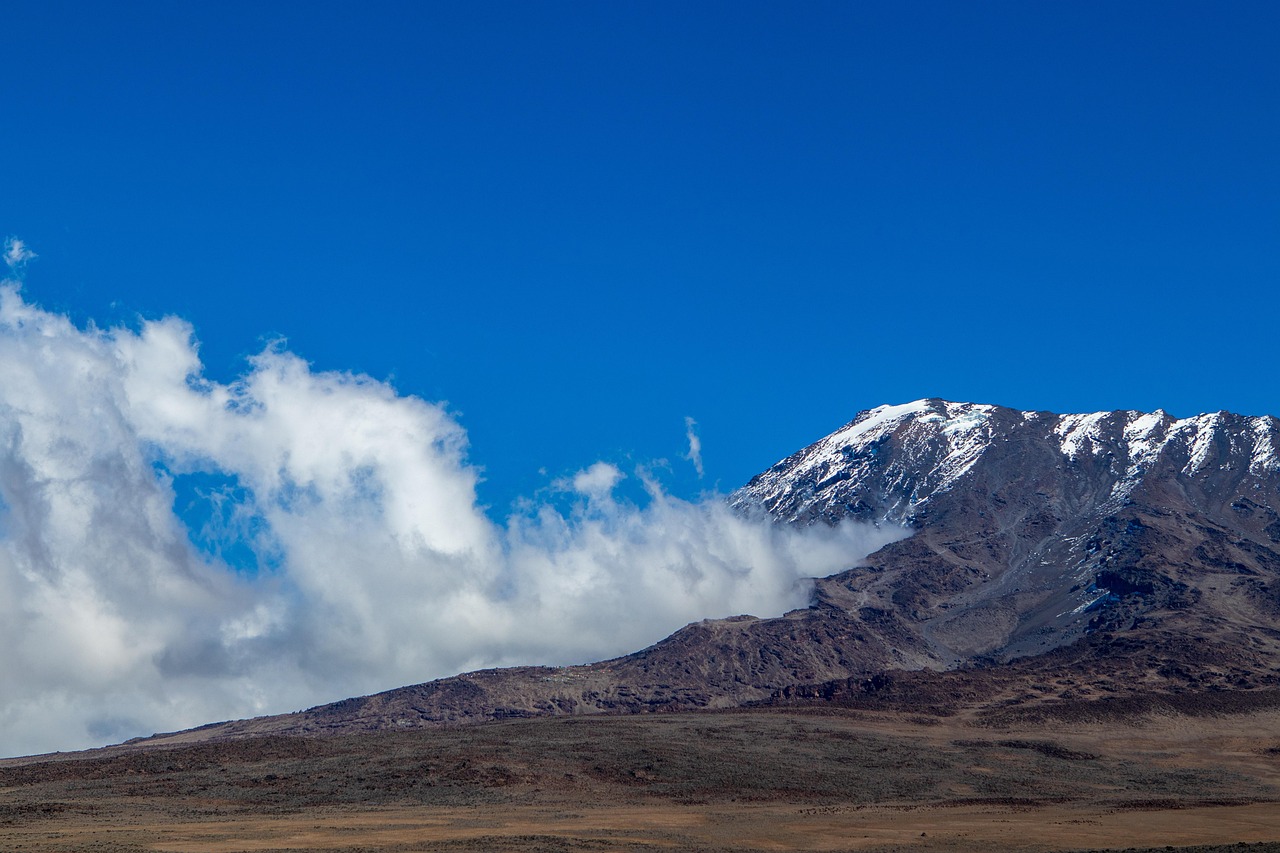
5-Day Rongai Route Kilimanjaro Climb
Safari at a Glance
The Shortest Legal Climb on Kilimanjaro, Walked Up the Quiet Northern Side
🏆 TripAdvisor Travellers' Choice 2024, 2025 & 2026 · ✅ Kenya TRA Licensed No. TRA1/47/C01/25895 · 🏛️ TOSK (Tour Operators Society of Kenya) Member #0082 · 🇹🇿 Operated in Tanzania by our TALA-licensed partner — licence 037480. Certificate available on request.
5 Days · Kilimanjaro National Park · From $1,550 per person (group of 3+) or $1,670 private · All park fees included
Why the 5-Day Rongai Route?
Rongai is the only route that climbs Kilimanjaro from the north, starting at Nale Moru on the north-eastern flank near the Kenyan border. That one fact shapes the weather, the crowds, the drive in and which side of the mountain you come down.
Five days is the shortest itinerary Tanzania permits — the park authority puts the minimum at five. Four nights on the mountain, three before summit night. It is our lowest group rate, and what the compression buys you is a nine to ten hour second day and no margin if altitude disagrees with you.
What it does not cost you is the north side itself: dry, open and genuinely quiet for three days. If this is your first big mountain, read the last section first.
📋 Rongai Route at a Glance
| Feature | Details |
|---|---|
| ⏱️ Days | 5 days · 4 nights on the mountain |
| 🗺️ Route | Rongai — the only ascent from the northern side |
| 📍 Start Gate | Nale Moru (Rongai Gate), about 1,950 m |
| 🧭 Descent Route | Marangu, out via Marangu Gate, about 1,850 m |
| 🏕️ Highest Camp | Kibo Hut, about 4,700 m |
| 🏔️ Summit Approach Point | Gilman's Point, 5,685 m, then 1–2 hours to Uhuru Peak, 5,895 m |
| 📏 Total Distance | Published totals for the five-day Rongai vary; the daily distances are below |
| 💪 Difficulty | Hard — no climbing skills, but one nine-to-ten-hour day and no margin if altitude disagrees with you |
| 📅 Best Months | January to early March · June to October — the driest ascent on the mountain in April, May and November |
| 💰 Price | $1,670 private · $1,550 per person in a group of 3+ · all park fees included |
🗓️ Your Climb, Day by Day
🚐 Day 1 — Moshi to Nale Moru and Simba Camp
Transfer 3–4 hours · Trek 6–8 km · 3–4 hours · Farmland and pine forest
The drive is the first honest thing about Rongai. There is no road across Kilimanjaro, so getting from Moshi to Nale Moru means going the long way round the eastern flank: 90 to 110 km, three to four hours, tarmac then graded murram. Permits are processed on the Marangu side, and there is also a registration point at the Nalemoru gate; your guide confirms which applies on the day.
You start walking at about 1,950 m, after lunch. Do not expect rainforest: maize and potato smallholdings, then planted pine and thin montane forest. Camp is Simba Camp, also called First Cave — published altitudes run from 2,600 m to 2,835 m.
🌾 Day 2 — Simba Camp to Third Cave, via Second Cave
13 km · 9–10 hours · Moorland
The day that defines this itinerary. Lunch at Second Cave at about 3,450 m, then a long afternoon across open moorland to Third Cave, which sources put between 3,600 m and 3,800 m. Nothing is technical; what is hard is the length, and close to a kilometre of height in one push.
🏜️ Day 3 — Third Cave to Kibo Hut
12 km · 6–7 hours · Alpine desert
The heather thins and stops. You climb onto the Saddle, the high desert between Mawenzi's broken peak and the dome of Kibo, and cross it to Kibo Hut at about 4,700 m: no shade, no shelter, no vegetation, usually wind. Rongai meets the Marangu route here, so after three quiet days the camp feels crowded.
⛰️ Day 4 — Summit night, and down to Horombo
16.5 km · 11–14 hours · Arctic zone down to heath
Up at 23:30 and on the scree by midnight, the crater rim near sunrise, Uhuru Peak, then all the way down to Horombo Huts at 3,720 m. The leg is 16.5 km on the itinerary we follow; other operators publish up to 24 km for the same ground. Set out in full under Summit Night, below.
🌳 Day 5 — Horombo Huts to Marangu Gate
19–20 km · 5–7 hours · Rainforest
A long steady descent past Mandara Huts at 2,700 m, where the forest starts — the rainforest the southern routes begin in: tall, wet, slippery underfoot. You sign out at Marangu Gate, about 1,850 m, on the opposite side of the mountain from where you started.
🫁 Acclimatisation on This Route
The profile is a straight ladder: about 1,950 m at the gate, then nights at 2,600–2,835 m, 3,600–3,800 m and about 4,700 m. Three nights, then the summit. No rest day, and no climb-high-sleep-low excursion — Rongai has no natural one the way Machame does at Lava Tower.
Everything rests on how fast your body adapts, and five days gives you no safe way to find out. The six-day Rongai adds a night at Mawenzi Tarn, about 4,300 m — the biggest single improvement to your chances available on this mountain.
⛰️ Summit Night
You leave Kibo Hut, about 4,700 m, around midnight: switchbacks on loose volcanic scree, steep, cold and monotonous, in the dark, past Hans Meyer Cave at 5,150 m. The summit zone commonly sits between about −20 °C and −10 °C before wind chill.
Five to six hours out, usually near sunrise, you reach the rim at Gilman's Point, 5,685 m. Climbers coming up from Barafu top out at Stella Point, 5,756 m, about an hour from Uhuru; from Gilman's you have about 210 m of ascent and one to two hours of rim walking still ahead. That is the honest trade for a quieter, drier ascent. Then down the same scree and on to Horombo — eleven to fourteen hours all told.
🩺 Altitude, Health and Turning Back
Altitude, not fitness, is what stops most people. AMS — acute mountain sickness — is the common form: headache with some mix of nausea, lost appetite, dizziness and broken sleep, because you have climbed faster than your body has adapted. Between half and three-quarters of Kilimanjaro trekkers get some degree of it, and it usually settles with rest, water and no further climbing that day. AMS is normal; what it can turn into is not. HAPE, high-altitude pulmonary oedema, is fluid on the lungs — breathlessness at rest, a cough that will not stop, blue lips. HACE, high-altitude cerebral oedema, is swelling of the brain — confusion, stumbling, unable to walk a straight line. Both are life-threatening, and both have one treatment: go down, at once. Do not hide symptoms.
Rescue, honestly. Helicopters fly on Kilimanjaro but cannot land above roughly 4,900 m and do not fly at night or in bad weather, which rules them out for most of summit night. Above Kibo Hut, real evacuation means going down on foot, assisted. Your insurance must cover trekking to 6,000 m including helicopter evacuation: a policy written for 4,000 m does not cover Uhuru Peak, and the park rescue fee inside your price is a park charge, not insurance.
Ask us, in writing. Before you book we will put in writing exactly what health monitoring, emergency equipment and crew your climb carries. Ask us, and ask anyone else you are considering. An operator who will not answer that in writing is telling you something.
📊 About Success Rates
We publish no summit success percentage, and we treat the ones you read elsewhere with care. Nobody audits them, there is no shared definition of "success", and nothing stops a company printing a better number than it earned.
The only figures the park authority is known to have published date from 2006, and they are far too old to describe the mountain as it is climbed now.
What decides your summit is time on the mountain, a profile your body can adapt to, walking slowly, drinking enough, and a guide willing to turn you around. Longer itineraries summit more often — the one relationship every source agrees on. Five days is the least generous setting of that variable, which is why we would rather sell you the 6-Day Rongai. We would rather explain that than print a number we cannot stand behind.
✅ What's Included
- All Kilimanjaro National Park fees — conservation, camping or hut, and rescue fees
- Licensed mountain guide and full mountain crew
- All meals on the mountain
- Drinking water on the mountain
- Group camping equipment
- Road transfer to the Rongai trailhead and back from Marangu Gate
❌ What's Not Included
- International and regional flights
- Tanzania visa
- Travel insurance — which must cover trekking to 6,000 m and helicopter evacuation
- Personal gear hire, including sleeping bags
- Tips for the mountain crew
About tips. Tips are customary and are in nobody's price. They are worked out for the group as a whole and shared among the guides, cook and porters — not charged per climber — so the cost per person falls sharply as the group grows: two climbers carry the whole tip between them, six carry the same tip between six. We put the recommended figure in writing before you travel.
🎒 What to Bring
- A four-season sleeping bag
- Waterproof boots with ankle support, worn in before you fly
- An insulated down jacket for camp and summit night
- Waterproof shell jacket and over-trousers
- Two sets of thermal base layers, a fleece mid layer and trekking trousers
- Insulated gloves or mitts plus thin liners — you cannot work a zip in the outers
- A warm hat, a sun hat and a neck buff
- Category 3 or 4 sunglasses, high-factor sunscreen and SPF lip balm
- A head torch and spare batteries, kept warm
- Three litres of water capacity including two bottles — bladder tubes freeze on summit night
- Two adjustable trekking poles for the descent
- A 30–35 litre daypack with a rain cover, and a soft duffel for the porters
- Blister plasters, a first-aid kit and rehydration salts, plus any prescription medicine
- Passport, insurance documents and your yellow fever certificate if you travel from Kenya, plus small notes in cash for crew tips
👍 Who This Route Suits — and Who It Doesn't
It suits a fit climber who has slept above 4,000 m before and knows how they react; anyone whose real constraint is time or money; and walkers who want empty trail more than dramatic scenery.
It does not suit first-timers: with no experience of altitude, five days gives you no room to find out how you handle it, so buy the seven-day Rongai, or at least the six-day. Nor does it suit anyone climbing for southern-side scenery, which is what 7-Day Lemosho and 7-Day Machame are for.
🔗 Combine it: the same trail with more room in it is the 6-Day Rongai and the 7-Day Rongai. The 5-Day Marangu is the other five-day, sharing Kibo Hut, Gilman's Point and this descent. All thirteen are on our Kilimanjaro Climbs page. Either side of the climb, the Marangu Day Hike and Kikuletwa Hot Springs are on the Moshi day trips page. Or compare all six.
❓ Frequently Asked Questions
How fit do I need to be?
Fit enough to walk ten hours and then get up and do it again. There is no technical ground on Rongai, but day two is nine to ten hours and the summit day is eleven to fourteen hours on your feet. Train on hills with a loaded pack.
Is Rongai any good in the rains?
It is the least-bad choice, which is not the same as a good one. The northern slopes sit in the rain shadow of the peaks, so the ascent is the driest on the mountain and the trail drains rather than turning to mud in April, May and November. It cannot cancel the rainy season: summit night is unchanged, and your whole descent is down the wet southern side.
What happens if I cannot continue?
You go down, with a guide, on foot or assisted. Turning back is not unusual and not a failure: altitude does not negotiate, and going down is the one thing that reliably works.
Do I need a yellow fever certificate?
It depends where you fly from. Tanzania requires one from travellers over a year old arriving from a country with a risk of yellow fever transmission, or transiting more than 12 hours through an airport in one. Kenya is on the World Health Organization's risk list, so bring it if you are coming from Nairobi or crossing the land border — and carry it even on a connection, where a delay can push you past 12 hours. Flying direct from Europe you generally do not need one. Confirm current requirements before you travel.
What does the price include, and can I cancel?
All park fees, your licensed guide and crew, all meals and drinking water on the mountain, group camping equipment and gate transfers. Not flights, visa, insurance, gear hire or tips. A 50% deposit confirms the booking and the balance is due 14 days before departure; cancel with 14 days' notice for a full refund, or reschedule within 12 months.
Why Rongai rather than Marangu?
Both are five-day climbs summiting from Kibo Hut by Gilman's Point and descending the Marangu trail, so the top of the mountain is identical. The difference is the bottom: Marangu goes up and down the same busy southern path, while Rongai walks in from the north with three near-empty days. Marangu sleeps in huts — see 5-Day Marangu.
📞 How to Book
A 50% deposit confirms the booking. The balance is due 14 days before departure. Booking inside 14 days: full payment confirms it. Cancel with 14 days' notice for a full refund, or reschedule within 12 months. The group rate applies from three climbers.
We accept M-Pesa and bank transfer. Payment details are sent with your written invoice.
We never request payment through social media, personal phone numbers, or any account or link not confirmed in writing by our office. If in doubt, call us before paying anyone.
Tell us your dates and group size. We confirm availability, your departure date and the arrangements in writing before you pay anything.
📱 WhatsApp / Call: +254 729 257 317 · +254 734 417 496
🇦🇹 Austria: +43 650 702 1313 · +43 676 676 8130
Booking and payment stay with us in Nairobi. Talk to us before you decide.
Operated in Tanzania by our TALA-licensed partner — licence 037480. Certificate available on request.
Prices shown are for non-resident climbers. East African citizens pay lower national-park fees — see our East African citizen rates.
Where You Will Visit
This safari explores the following regions in Tanzania
- Mt. Kilimanjaro