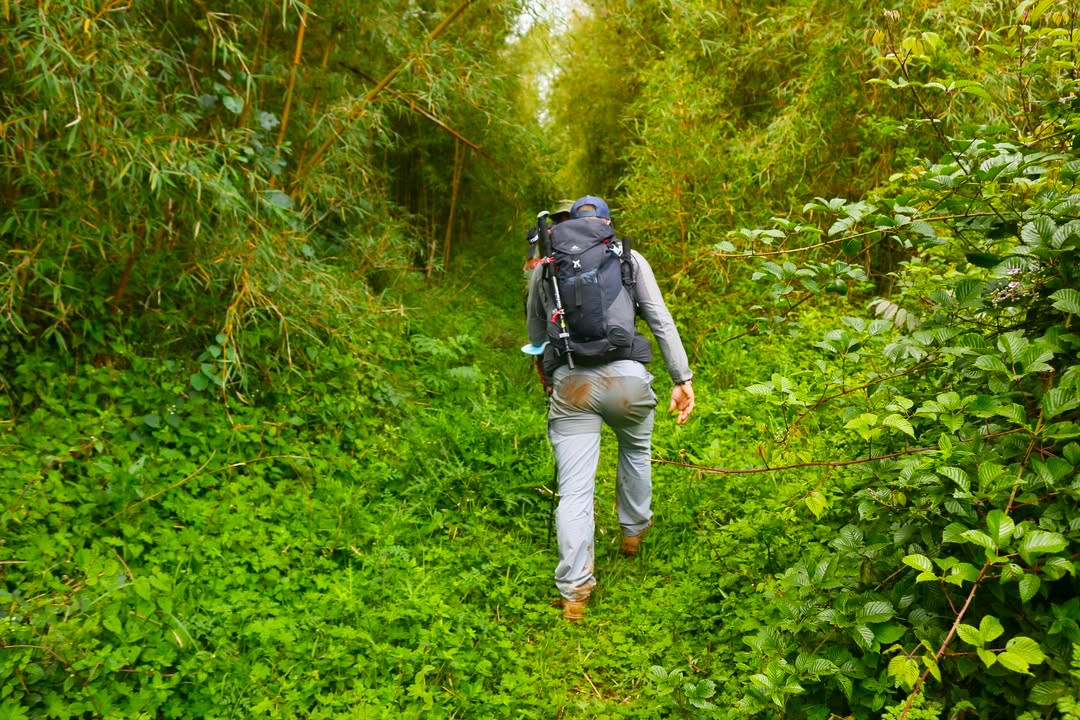
Kimakia Forest Bathing Trek
Safari at a Glance
Wild Springs Adventures | 📍 Kimakia Forest Station, Gatanga Sub-County, Murang'a County
🏆 TripAdvisor Travelers' Choice 2024 & 2025 · ✅ TRA Licensed No. TRA1/47/C01/25895 · 🏛️ TOSK Member #0082
From KES 3,250 per person · Daily Departures · Private and Group Options
The Name Tells You Everything
Kimakia. In Kikuyu, the word means to surprise — to shock and awe. The people who named this forest were not being poetic. They were giving accurate directions.
The drive in is the first surprise. The road winds through the tea fields of Gatura and Kiarutara in the southern Aberdares — rolling green rows of Camellia sinensis on either side, Murang'a County agriculture at its most photogenic, coffee farms and flower farms on the lower slopes. You do not expect what comes next: a canopy of ancient indigenous forest closing overhead as the track reaches the old fishing camp, the air temperature dropping five degrees in as many seconds, the sound of the Chania River somewhere below the treeline.
Then comes the Mugumo tree. A giant sacred fig (Ficus thonningii), its trunk wider than four people can encompass. In Kikuyu tradition, the Mugumo is the tree where the divine resides — Ngai's presence made visible in root and bark and canopy. You walk past it and down to the river.
Then the river crossings. Plural. The Chania River does not have a bridge at the point you cross it. Boots off, trousers up, feet in cold mountain water, stones underfoot. Your guide goes first. Then the Ragia River. Then more forest.
Then the waterfall. Approximately 60 metres in two cascading tiers, dropping through the indigenous forest canopy onto the rocks below. You hear it long before you see it. The sound builds for ten minutes as you approach, growing from background to foreground to the only thing in your awareness. When it appears — the full double-tier cascade in the forest clearing — the word kimakia makes complete sense.
🌿 Why This Is a Forest Bathing Trek — The Science Behind the Name
Wild Springs calls this a forest bathing trek deliberately. The Japanese practice of Shinrin-yoku — translated as forest bathing — is the act of immersing yourself in forest atmosphere through all five senses. It is not a metaphor. It is a field of preventive medicine with peer-reviewed research published in journals including Environmental Health and Preventive Medicine and the National Institutes of Health.
Kimakia's indigenous forest is dominated by Juniperus procera — the African Pencil Cedar, known as mutarakwa in Kikuyu. Juniper species are among the most studied tree families for the release of phytoncides — antimicrobial volatile organic compounds that trees emit as a defence mechanism. When you breathe phytoncides in a forest like Kimakia, the research shows measurable physiological effects:
- Immune activation — natural killer (NK) cell activity increases
- Cortisol reduction — the primary stress hormone measurably decreases
- Autonomic nervous system shift — parasympathetic dominance over sympathetic (rest mode, not fight-or-flight)
- Blood pressure reduction — documented across multiple intervention studies
- Cognitive restoration — attentional fatigue from screen work reverses
A 2017 state-of-the-art review of 64 studies concluded that shinrin-yoku produces consistent physiological benefits across all the above domains.
The Kimakia trail is, in effect, a 6-hour phytoncide immersion through one of the most intact indigenous forest corridors accessible as a day trip from Nairobi. The river crossings, the waterfall, the Mugumo tree, the birdsong — these are not decorative. They are the full-spectrum sensory engagement that the research identifies as the mechanism of the benefit.
This is what forest bathing actually means. Not a gentle walk in city trees. This.
🎯 Kimakia Forest Trek at a Glance
| Feature | Detail |
|---|---|
| 📍 Location | Kimakia Forest Station, Gatanga Sub-County, Murang'a County · border with Gatundu North, Kiambu County |
| 🌳 Forest Size | 12,997 hectares — 6,941 ha natural forest · 1,130 ha plantation · 4,852 ha bamboo. Managed by Kenya Forest Service |
| 📏 Distance | ~15km full circuit (fishing camp start) · ~8km shorter option (water intake start) |
| ⏱️ Duration | 6–7 hours (fishing camp) · 4 hours (water intake) |
| 💪 Difficulty | Moderate to Challenging — multiple river crossings including barefoot sections, slippery descents |
| 💧 Main Features | Giant Mugumo sacred fig tree · Chania River crossing · Ragia River walking · Kimakia Falls ~60m double-tier · Swimming pool at base |
| 🚗 From Nairobi | ~85km · approx. 2 to 2.5 hours via Thika-Gatura road (A2/C67) |
| 📍 Trailhead GPS | -0.9912, 37.0102 — Kimakia Forest Station, old fishing camp |
| 🅿️ Self-Drive | ✅ Safe parking at KFS station — self-drive discount available |
| 🌡️ Forest Temp | 5–8°C cooler than Nairobi — long layers and jacket recommended |
| 🚁 Emergency Cover | AMREF Flying Doctors evacuation — all participants, all day |
🗺️ The Trail — Section by Section
The Five Things You Will Encounter on the Kimakia Circuit
1. Kimakia Forest Station — The Old Fishing Camp
The trail starts at the KFS forest station beside the old fishing camp — a clearing in the forest with a sense of having been in regular, unhurried use for decades. Fly-fishermen used the Chania River here long before hiking became an organised activity. The camp is the last flat ground before the trail descends. Your guide briefs the group here, explains the river crossing protocol, and confirms boot-off sections. This is also where the wide forest service road begins — a gradual, well-shaded track through the canopy that opens the hike gently before the forest closes in.
2. The Giant Mugumo Tree
The trail descends through the indigenous forest toward the Chania River, and on the way down it passes a giant Mugumo — a sacred fig tree (Ficus thonningii) of a scale that stops every group that walks past it.
The Mugumo holds a specific place in Kikuyu cosmology. It was the tree in whose shade Ngai (the Kikuyu deity) was believed to be present. No Mugumo was felled deliberately — doing so was considered a severe transgression. Some Mugumo trees near the Aberdares were used as sites for prayer before and after significant events. The one on the Kimakia trail is old enough to have been a landmark for communities in this valley for generations. Its canopy is wide. Its root system has cracked and lifted the trail surface around it.
Stand next to it for a moment before continuing. The scale changes your sense of what old means.
3. The Chania River — Barefoot Crossings
The Chania River is the primary water body of this trail. It does not have a bridge at the crossing point. Boots and socks come off. The water is cold — this is an Aberdare forest river fed by highland rainfall. The riverbed is stone and gravel. The guide crosses first and indicates the line. You follow. The river is not dangerous in dry season but it commands respect and proper attention. After rain, water volume increases significantly. Your guide reads conditions and makes the call.
The word "river crossing" in the itinerary description sounds manageable until you are standing at the bank in cold Aberdare air, boots in one hand, and the water is moving faster than it looked from above. This is one of those trail moments that lands differently in person than in a description.
There are multiple Chania crossings on the full circuit. Plan to get your feet wet.
4. Walking the Ragia River
After the Chania crossings, the trail follows the Ragia River upstream — literally in and beside the river for sections of the trail. River walking means navigating rocks, shallow channels, and mossy banks with the sound of moving water on all sides. The valley narrows. The canopy closes. The forest becomes more intimate and more specific — tree ferns, liverworts, and water-margin plants that grow only in permanently wet conditions surround the path.
The acoustics change here. The waterfall becomes audible as a low, continuous rumble long before it is visible. It builds for ten minutes as you approach, growing from background awareness to foreground presence. The trail climbs slightly over the final approach, and then — it is there.
5. Kimakia Falls — The ~60m Double-Tier Cascade
The waterfall drops in two distinct tiers — a double-staircase of approximately 60 metres total, crashing onto a rock shelf and then continuing to a pool below. Both tiers are visible from different positions near the base. The spray reaches 10 to 15 metres from the rock face on full-flow days.
The pool at the base is the swimming point. The water is cold — genuinely cold, Aberdare-river cold. Groups who swim here tend to stay longer than planned. Bring a change of clothes. The exit from the water into the forest air at this altitude is bracing in the best possible sense.
The forest at the waterfall base is old growth. The trees are tall. The canopy above the waterfall is unbroken. Sitting at the pool edge looking up at the double-tier cascade through the canopy gap is the image that people keep from this trail.
Return — the trail retraces via the Ragia River and Chania crossings back to the KFS station. The descent through the forest is different in direction and different in light. Afternoon forest light in the Aberdares has a quality that photographers describe as the best window of the day.
🕐 Full Day Itinerary - Hour by Hour
🚐 06:00 — Nairobi Departure
Wild Springs departs Nairobi at 06:00 from the agreed pickup point. The drive follows the A2 to Thika — approximately 45 minutes. Thika Town stopover for breakfast and snack supplies. The road then continues through Gatanga Sub-County — coffee farms, flower nurseries, and the purple-leaf tea fields of Gatura and Kiarutara. The drive through the tea country is one of the most scenic day-trip routes from Nairobi.
Self-drive option: Safe parking at KFS Kimakia Forest Station. Drive A2 to Thika, continue on the C67/Thika-Gatura road through Gatanga constituency. Follow KFS signage. GPS: -0.9912, 37.0102. Your guide meets you at the station.
📋 09:00 — KFS Kimakia Forest Station · Briefing
Arrive at the old fishing camp. KFS entry fee paid. Guide introduces the group, explains the trail structure, confirms river crossing protocol (boots-off sections, water depth reading), and reviews the forest bathing principles for the day — what to smell, what to notice, what to leave behind from the week before.
🌳 09:30 — Forest Service Road Through Indigenous Canopy
The first section is wide, shaded, and gradual. The indigenous forest overhead is dense enough that the temperature drops immediately on entry. Juniperus procera (mutarakwa) dominates the canopy — the aromatic cedar whose volatile compounds fill the forest air. The forest bathing begins here, whether you name it that or not.
🌳 10:15 — Descent to the Giant Mugumo Tree
The road narrows to trail. The trail descends. The Mugumo tree appears at the bottom of the slope — wider than four people, rooted in the trail like it owns the path (it does).
💧 10:30 — Chania River First Crossing
Boots off. Cold water. Stone bed. Guide goes first.
🌊 11:00–12:30 — Ragia River Walking and Approach to Falls
The upstream walk along the Ragia River. The sound builds. The canopy narrows. The waterfall rumble grows from background to everything.
💦 13:00 — Kimakia Falls · Swimming · Lunch
Arrival at the double-tier cascade. The ~60m drop. The spray. The pool. Lunch here — either your own packed food or Wild Springs' included trail snacks. Swimming optional but recommended. Rest minimum 45 minutes. This is the point.
⬇️ 14:00 — Return Trail
Retrace via Ragia River, Chania crossings (cold again on the way back), forest road, Mugumo. The forest is different on the way out — you are slower, quieter, more observant.
🚐 17:00 — KFS Station Return · Nairobi
Gate by 17:00. Nairobi by 19:30.
🌿 Flora — Kimakia Forest Species
Kimakia's 6,941 hectares of natural forest hold one of the most intact sections of southern Aberdare indigenous montane forest within day-trip distance of Nairobi.
Dominant species:
- Juniperus procera (African Pencil Cedar / mutarakwa) — the signature tree of the Kimakia canopy. A slow-growing, long-lived Afro-montane conifer that reaches 40 metres in old-growth stands. Its bark is reddish-brown and aromatic. Its volatile compounds — phytoncides — are the biological basis for the forest bathing benefits documented in shinrin-yoku research.
- Ficus thonningii (Giant Mugumo / Sacred Fig) — the Kikuyu's sacred tree. The specimen on the Kimakia trail is among the largest visible from any trail in the southern Aberdares.
- Podocarpus latifolius (Broad-leaf Yellowwood) — Kenya's largest indigenous tree species, present in the old-growth sections.
- Nuxia congesta (Forest Elder) — common in the mid-elevation sections, with distinctive dense flower clusters.
Waterfall margin species: The base of Kimakia Falls supports a specialist plant community adapted to permanent spray and shade — tree ferns (Cyathea spp.), mosses, liverworts, and water-margin sedges that create the lush green framing visible in every photograph of the falls.
River corridor: The Chania and Ragia river margins hold riparian forest species not found on the drier upslope sections — ferns, ground orchids, and dense herbaceous understorey that thrives in the permanently moist microhabitat.
🦁 Wildlife — What Lives in Kimakia
| 🐾 Species | 👁️ Likelihood | 📍 Where | Note |
|---|---|---|---|
| 🐘 Forest Elephant | ★★★★☆ | Forest and river sections | Active in the forest — fresh sign common near the Ragia River |
| 🐒 Black-and-White Colobus | ★★★★☆ | Indigenous forest canopy | Reliable throughout — groups heard before seen |
| 🐒 Olive Baboon | ★★★☆☆ | Forest margins and clearings | Common near the camp and open sections |
| 🦌 Forest Duiker | ★★★☆☆ | Dense forest and river margins | Often flushed from undergrowth on the descent |
| 🦔 African Porcupine | ★★☆☆☆ | Ground level throughout | Tracks and diggings visible along river banks |
| 🐆 Serval Cat | ★★☆☆☆ | Forest clearings | Present — occasionally seen on early morning departures |
| 🐟 River Fish | ★★★★★ | Chania and Ragia rivers | The rivers were fished historically — the camp is called the "fishing camp" for reason |
🔭 Birding — Kimakia Forest
Kimakia's position at the southern end of the Aberdare forest block, straddling the Murang'a-Kiambu county border, places it within the broader Aberdare Important Bird Area (IBA) designation.
- Abbott's Starling (Poeoptera femoralis) — globally threatened; Kimakia Forest is confirmed habitat. Among Kenya's rarest montane forest birds and a primary target for birders visiting the southern Aberdares.
- Bar-tailed Trogon (Apaloderma vittatum) — present in old-growth sections. Often perches motionlessly — heard before seen.
- Hartlaub's Turaco — crimson wing flash in the Juniperus canopy. Heard throughout as a rattling call.
- African Crowned Eagle — nests in old-growth forest. Occasionally soars over the forest clearings.
- White-starred Robin — a Kikuyu highlands specialist found in dense forest understorey sections.
- Various Sunbird Species — active in flowering trees along the forest road section.
Log your sightings at the Aberdare South eBird hotspot.
💰 2026 Pricing - Kimakia Forest Bathing Trek
All-inclusive. No hidden KFS fees at the gate.
| 👥 Group Size | 🇰🇪 Kenyan Citizens | 🌍 EAC Residents | 🌐 Non-Residents |
|---|---|---|---|
| 1–2 Persons | KES 4,200 pp | KES 4,800 pp | $72 pp |
| 3–5 Persons | KES 3,600 pp | KES 4,200 pp | $64 pp |
| 6–10 Persons | KES 3,250 pp | KES 3,800 pp | $58 pp |
| 11–20 Persons | KES 2,950 pp | KES 3,500 pp | $52 pp |
| Self-Drive | Deduct KES 400 pp | Deduct KES 400 pp | Deduct $8 pp |
📌 Deposit: 30% confirms booking · Balance on the morning of the hike
📌 Cancellation: Full refund with 48 hours' notice
Payment details are sent with your written invoice.
✅ What Is Included
- ✔ 🚐 Round-trip transport from Nairobi — CBD or Westlands pickup
- ✔ 🎫 KFS Kimakia Forest Station entry fees — all participants
- ✔ 🧭 Experienced Wild Springs forest guide — Kimakia circuit specialist
- ✔ 🍱 Trail snacks and drinking water
- ✔ 🩺 Emergency first aid kit
- ✔ 🚁 AMREF Flying Doctors emergency evacuation cover — all participants, all day
❌ What Is Not Included
- ✗ Breakfast — Thika Town stopover for food on the way (budget KES 300–600)
- ✗ Personal lunch at the waterfall — bring your own or advise us at booking
- ✗ Change of clothes — strongly recommended, river crossings guarantee wet feet
- ✗ Personal hiking gear — waterproof boots, trekking poles, light jacket
- ✗ Transport if self-driving — parking available at KFS station
- ✗ Tips — guide KES 500–1,000 suggested
- ✗ Travel insurance — strongly recommended
🏢 Kimakia Forest — Corporate Team Building and Wellness Retreat
The Original Kenyan Forest Wellness Experience
The science of shinrin-yoku gives corporate wellness programmes something that conference rooms, team lunches, and facilitated workshops cannot: measurable biological change. Cortisol — the primary stress hormone — decreases measurably after two hours in indigenous forest. Natural killer cell activity increases. Attention and cognitive performance restore after nature immersion in ways that screen breaks and coffee cannot replicate.
Kimakia Forest, with its intact Juniperus procera canopy and multiple sensory engagements — cold river crossings, waterfall immersion, birdsong, forest aromas — is one of the most complete forest bathing environments accessible as a Nairobi day trip. We run it for corporate teams as a structured wellness programme, not just a hike.
What differentiates the Kimakia corporate experience:
| Element | What It Delivers |
|---|---|
| Cold river crossing | Shared physical challenge — removes hierarchy, requires mutual support |
| Phytoncide immersion | Measurable cortisol reduction — less stressed individuals make better decisions |
| Waterfall arrival | Collective destination reached — natural debrief moment |
| Forest walking protocol | Screen-free, conversation-led, attention-restored |
| Sacred Mugumo briefing | Cultural grounding — connects Nairobi professionals to the landscape they live within |
| Return walk | Integration time — the forest on the way back is the same forest but the people are different |
Corporate Pricing — Kimakia Forest Wellness Day
| 👥 Team Size | Price Per Person |
|---|---|
| 8 to 15 persons | KES 4,800 pp |
| 16 to 25 persons | KES 4,200 pp |
| 26 to 40 persons | KES 3,800 pp |
| 40+ / Full Retreat | Quote on request |
Includes: Private vehicle, experienced guide, KFS entry fees, trail snacks and water, AMREF evacuation cover, pre-hike forest bathing briefing, post-hike group reflection structure.
Available daily including weekends. Minimum 72 hours advance booking.
📬 Request corporate quote · View all team building packages
⚠️ Safety and Trail Honesty
River crossings require bare feet on some sections. The Chania River crossing is done with boots off at certain points. Pack light sandals or waterproof trail shoes that can be walked in wet. Alternatively, boots off, bag them, dry feet after. Your guide manages the crossing sequence.
The trail is slippery after rain. The descent through the forest and the river margin sections become significantly more technical after rainfall. The trail is not closed in wet conditions but difficulty increases. Trekking poles make a measurable difference.
Elephants are present in this forest. The Kimakia forest block is part of the Aberdare elephant corridor. Fresh sign — dung, broken vegetation — is common near the river sections. Your guide reads conditions and manages group behaviour in proximity to wildlife. Follow instructions without discussion.
The waterfall area can be cold and spray-heavy. Swimming is exhilarating but genuinely cold. Bring a towel. Bring a dry change of clothes. The 30–45 minutes at the falls is when hypothermia risk is highest — particularly for those who swim and then sit still in the forest air.
Two starting points give two different hikes:
- Fishing camp start (recommended): full forest experience, 6–7 hours, 15km
- Water intake start: shorter version, 4 hours, ~8km, less forest character but accessible for beginners or shorter days
Tell us at booking which you want. We plan the logistics accordingly.
🎒 What to Bring
Essential:
- 🥾 Waterproof hiking boots or trail shoes that can get wet — river crossings are unavoidable
- 🧦 Spare socks — wet feet for 6 hours without dry socks is the main comfort failure on this trail
- 👖 Long trousers — forest understorey and river banks
- 🧥 Light fleece or warm layer — the forest is 5–8°C cooler than Nairobi at all times
- 💧 3 litres of water minimum — the trail is longer than it seems
- 🍫 High-energy snacks — the waterfall is 3 hours from the gate, lunch is late
- 👕 Change of clothes for the return — wet gear after swimming makes the drive back uncomfortable
Strongly recommended:
- 🧗 Trekking poles — the descent sections and river margins reward them significantly
- 👟 Light sandals or waterproof alternatives for the barefoot crossing sections
- 📱 Camera or phone in a waterproof case — waterfall photography gets wet
🏪 Trekking poles, gaiters, and waterproof layers available at the Wild Springs Outdoor Store.
📅 Best Time to Visit Kimakia Forest
| Month | Conditions | River Level | Forest Character |
|---|---|---|---|
| January–February | ⭐⭐⭐⭐⭐ Ideal | Manageable | Dry trails, full forest cover |
| March | ⭐⭐⭐ Good-to-Variable | Rising | Trail begins to soften |
| April–May | ⭐⭐ Challenging | High | Slippery — crossings more demanding |
| June–August | ⭐⭐⭐⭐⭐ Ideal | Good | Best dry season — firm, clear, cooler |
| September | ⭐⭐⭐⭐ Good | Dropping | Excellent conditions |
| October | ⭐⭐⭐ Variable | Rising | Short rains begin |
| November | ⭐⭐⭐ Manageable | Moderate | Wet but not impassable |
| December | ⭐⭐⭐⭐ Good | Decreasing | Rains easing from mid-month |
Waterfall volume note: Kimakia Falls is most powerful and most dramatic in April-May and October-November. However, trail difficulty increases significantly in the same windows. The dry season months give excellent waterfall volume with manageable conditions.
🌿 Leave No Trace — KFS Kimakia Forest Rules
Kimakia is a Kenya Forest Service gazetted forest reserve — part of the Aberdare mountain water tower system feeding major rivers including the Chania and Thika.
- 🗑️ All waste exits with your group — nothing left at the waterfall or in the forest
- 🌿 No plants, seeds, or biological material removed
- 🔥 No fires — the forest is always moist but never fireproof
- 🐘 Follow guide instructions for all wildlife encounters — immediately and without discussion
- 💧 No soap or food waste in the Chania or Ragia rivers — these are drinking water sources downstream
- 📷 Respect the forest — photograph what you find, leave what you found
We read these conditions at the briefing. Every participant is responsible for upholding them.
🔗 Related Hikes
| Trail | Distance | Difficulty | Why Combine |
|---|---|---|---|
| 🌿 Ragia Forest Waterfalls | 18km | Moderate–Hard | Neighbouring forest, Mau Mau caves, General China Falls |
| 🐘 Elephant Hill | 7–10 hrs | Hard | Same border area, serious challenge |
| 💧 Seven Ponds Aberdares | 7–9 hrs | Challenging | Alpine ponds, 3,826m, next level |
| 🗻 Table Mountain Aberdares | 7–9 hrs | Hard | Wildflower glade, hidden cliff views |
| 🏔️ 3-Day Aberdare Safari | 3 Days | Various | Full Aberdare experience with camping |
Also nearby: Mataara Hike and Gacako Waterfalls — another trail straddling the Murang'a-Kiambu border near Kimakia. Ask us about combining Kimakia and Mataara in a weekend.
Post-hike accommodation: Kimakia Tea Cottages offer a peaceful, secluded tea farm stay near the forest. Ideal for groups wanting to extend the forest immersion beyond the single day. Ask at booking for referral.
📞 Book Your Kimakia Forest Bathing Trek
Daily departures. Private groups with 48 hours notice. Self-drive parking at KFS station.
📱 WhatsApp: +254 729 257 317 · +254 734 417 496
🇦🇹 Austria: +43 650 702 1313
🌍 For Our International Guests
🇩🇪 Deutsch: Shinrin-yoku-Waldbadetrek im Kimakia-Wald — 60m Doppelkaskaden-Wasserfall, Barfuß-Flussüberquerungen, heiliger Mugumo-Feigenbaum und Juniperus-procera-Urwald, 85 km von Nairobi. Wissenschaftlich belegte Phytonzid-Immersion in einem der unberührtesten Urwälder des südlichen Aberdare-Gebirges. Ab KES 3.250 pp. WhatsApp: +254 729 257 317 · Österreich: +43 650 702 1313
🇫🇷 Français: Trek de bain de forêt Shinrin-yoku dans la forêt de Kimakia — cascade double palier d'environ 60m, traversées de rivières pieds nus, grand figuier sacré Mugumo et forêt indigène de Juniperus procera, à 85 km de Nairobi. Immersion phytoncide dans un des espaces forestiers les plus préservés du massif sud des Aberdare. À partir de KES 3.250 pp. WhatsApp : +254 729 257 317
🇪🇸 Español: Trekkig de baño de bosque Shinrin-yoku en el bosque de Kimakia — cascada de dos niveles de ~60m, cruces de ríos descalzos, gran higuera sagrada Mugumo y bosque indígena de Juniperus procera, a 85 km de Nairobi. Inmersión en fitoncidas en uno de los bosques más intactos del macizo sur de los Aberdare. Desde KES 3.250 pp. WhatsApp: +254 729 257 317
We never request payment through social media, personal phone numbers, or any account or link not confirmed in writing by our office. If in doubt, call us before paying anyone.
Where You Will Visit
This safari explores the following regions in Kenya
- Geta Bush, Nyandarua County
- Kiambu