
Kenya Jungle Safari 2026: Ultimate Wildlife Guide | Wild Springs Adventures
Kenya Jungle Safari 2026: Ultimate Wildlife Guide | Wild Springs Adventures
Embark on a Kenya safari in 2026 for an unforgettable wildlife experience. Explore diverse ecosystems, witness the iconic Big Five (lion, leopard, elephant, rhinoceros, buffalo), and marvel at the Great Migration featuring nearly 2 million wildebeest and zebras. Kenya also offers unique encounters with the Little Five and Ugly Five, highlighting the intricate balance of its ecosystems.
Wild Springs Adventures, with over 20 years of expertise, ensures a top-tier safari experience with certified guides, private 4×4 vehicles, personalized tours, and a 98% Big Five spotting rate. Beyond game drives, enjoy hot air balloon rides, walking safaris, and community conservation visits.
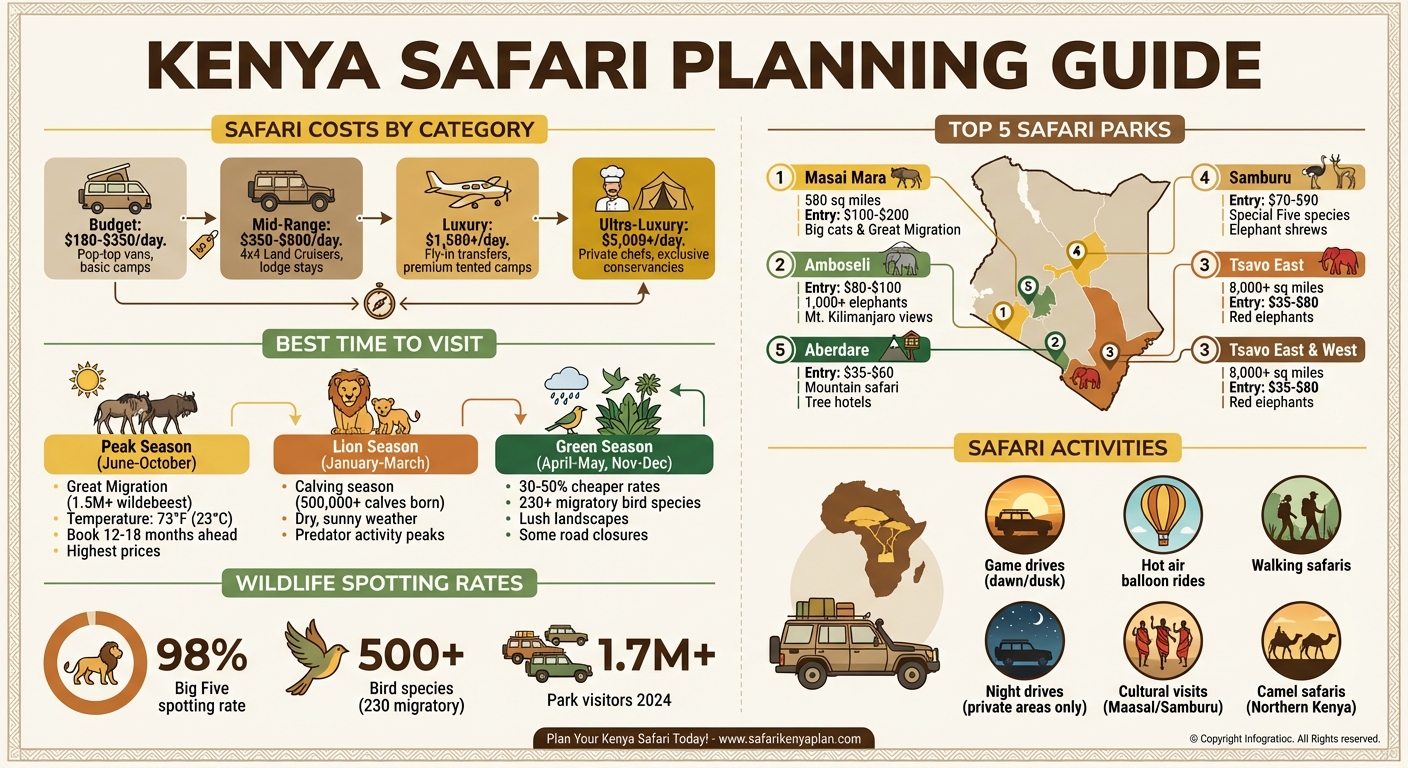
Plan your visit during the dry season (June to October) for optimal wildlife viewing or the calving season (January to March) for dramatic predator-prey interactions. Budget safaris start at $180/day, while luxury packages can exceed $1,500/day. Conservation efforts are supported through tourism, ensuring the preservation of Kenya’s wildlife for future generations.
Key Highlights:
- Top Parks: Masai Mara, Amboseli, Tsavo, Samburu, Aberdare
- When to Visit: Dry season (June–October), Calving season (January–March)
- Safari Costs: Budget ($180–$350/day), Mid-range ($350–$800/day), Luxury ($1,500+/day)
- Activities: Game drives, night safaris, hot air balloons, walking safaris, cultural visits
Ready to plan your adventure? Visit wildsprings.co.ke or call +254 729 257 317.
Kenya Safari Guide 2026: The Ultimate First-Timer’s Manual
The Big Five Animals of Kenya
The Big Five – lion, leopard, elephant, rhinoceros, and buffalo – are the ultimate highlights of a Kenya safari. These animals, once prized by hunters, are now celebrated for their ecological importance and as photographic treasures. Spotting all five is a major achievement for wildlife enthusiasts.
Each species plays a key role in maintaining Kenya’s diverse ecosystems. Lions, as top predators, regulate herbivore populations. Elephants, often called nature’s architects, shape their habitats by creating pathways and uncovering water sources. Rhinos, under constant protection from poaching, symbolize conservation success stories across Africa. Learning about these animals’ behaviors and habitats not only enhances your safari but also fosters a deeper understanding of conservation efforts.
Kenya’s landscapes – from the sweeping savannahs of the Masai Mara to the volcanic terrains of Tsavo and the wetlands of Amboseli – offer unique habitats for these animals. The dry season (June to October) is ideal for wildlife viewing, as animals gather near water sources, making them easier to spot. With skilled guides and expert tracking, your chances of seeing all five increase significantly.
Here’s a closer look at each of Kenya’s Big Five and their importance in the wild.
Lion: Africa’s Top Predator
Lions are the most social of the big cats, living in prides that can include up to 30 members. Their iconic roar, which can be heard up to 5 miles away, serves as both a territorial signal and a way to communicate across vast distances. The Masai Mara National Reserve is a prime location to observe these majestic predators, especially during early morning or late afternoon game drives when they are most active.
Lions are also found in Amboseli National Park, Tsavo West National Park, and Lake Nakuru National Park. Female lions handle most of the hunting, while males protect the pride. During the heat of the day, lions often rest in the shade, conserving energy for nighttime hunts. They can sleep up to 20 hours a day, so patience is key when tracking them.
Leopard: The Elusive Cat
Leopards are solitary and secretive, making them the hardest of the Big Five to spot. Their nocturnal habits and excellent camouflage allow them to blend seamlessly into their surroundings. Often seen lounging in tree branches during the day, leopards are most commonly found in the Masai Mara and Tsavo West National Park, where experienced guides can help pinpoint their territories.
Unlike lions, leopards rely on stealth and strength to hunt alone. They are capable of hauling prey twice their weight into trees to keep it safe from scavengers. Night safaris offer the best chance to see these elusive cats, and expert trackers use specialized techniques to improve your odds of a sighting.
Elephant: Kenya’s Gentle Giants
African elephants, the largest land animals on Earth, are a highlight of any Kenyan safari. Amboseli National Park is famous for its large elephant herds, often numbering over 1,000, set against the stunning backdrop of Mount Kilimanjaro. Tsavo National Park is home to the “red elephants,” which use the region’s volcanic soil as a natural sunscreen and insect repellent.
These intelligent animals live in close-knit family groups led by matriarchs, who guide them to water and food sources. During the dry season, elephants gather around permanent water sources, offering excellent viewing opportunities. Samburu National Reserve is another great spot, with nearly 1,000 elephants calling it home.
Rhinoceros: Protected Species
Rhinoceroses are the most endangered of the Big Five, making sightings particularly special. Kenya is home to both black rhinos (solitary and critically endangered) and white rhinos. The Masai Mara hosts a small population of black rhinos, while sanctuaries like Ol Pejeta Conservancy, Lewa Wilderness Conservancy, and Lake Nakuru National Park provide safer environments for both species.
These sanctuaries play a vital role in rhino conservation, with anti-poaching patrols and veterinary care helping to stabilize populations. Black rhinos prefer dense vegetation, while white rhinos graze in open areas, requiring different tracking approaches. Lake Nakuru is one of the few places where you can see both species in a single visit. Safari fees contribute directly to these conservation efforts, funding rangers and community programs.
Buffalo: Powerful Herd Animals
Often underestimated, African buffalo are formidable animals known for their unpredictable behavior. They travel in herds ranging from a few dozen to several hundred and are widely distributed across Kenya’s parks, including the Masai Mara, Amboseli, Tsavo West, and Lake Nakuru.
Buffalo are key to maintaining habitat diversity by grazing on tall grasses, which opens up spaces for smaller species. They are also a primary prey for lions, leading to dramatic predator-prey interactions. During the dry season, buffalo gather around water sources, making them easier to locate compared to some of the other Big Five members.
The Ugly Five: Important Wildlife You’ll See
While the Big Five often dominate safari wish lists, Kenya’s “Ugly Five” – wildebeest, hyena, warthog, vulture, and marabou stork – are just as vital to the ecosystem. These species, often overshadowed, play key roles in maintaining the delicate balance of nature, making your safari experience richer and more meaningful.
You’ll find these animals throughout Kenya’s parks. For example, the Masai Mara becomes a hub for over 1.5 million wildebeest during the Great Migration from July to October. Alongside them, you’ll spot plenty of spotted hyenas and vultures. Nairobi National Park, with its impressive record of over 520 bird species, offers a chance to see warthogs, hyenas, and various vultures up close. Samburu National Reserve is another hotspot, home to desert warthogs and an incredible range of vultures, including lappet-faced, white-headed, and white-backed species.
Timing is everything when it comes to wildlife viewing. Hyenas are most active at dawn and dusk, so plan your game drives around these hours. To catch the wildebeest migration, visit the Masai Mara during the migration months. If you’re there between January and March, you’ll witness the calving season, when over 500,000 calves are born in just a few weeks. This period also brings dramatic predator-prey interactions as scavengers and predators swarm the herds.
Appreciating these animals adds depth to your safari, turning it into a journey of understanding the intricate dynamics of Kenya’s ecosystem. Below, let’s dive into the roles and behaviors of each member. Learn more about the Ugly Five.
Marabou Stork and Vultures: Nature’s Cleanup Crew
Marabou storks and vultures are the unsung heroes of Kenya’s wilderness, acting as nature’s cleanup team. They consume carcasses quickly, helping to control pathogens and prevent disease outbreaks. These scavengers often arrive at kill sites even before predators have finished their meals.
Marabou storks are commonly found near water bodies like Lake Naivasha and Lake Baringo. Their large wingspans and bald heads make them easy to spot. Vultures, on the other hand, are widespread across the Masai Mara, Samburu, and Nairobi National Park. Samburu, in particular, is notable for hosting a diverse array of vulture species.
Warthog: Common Safari Sighting
Warthogs are a familiar and entertaining sight on any safari. You’ll often see them trotting across open grasslands with their tails held high like little flags. Their rugged faces, marked by facial pads and tusks, give them a distinctive look. These adaptable animals are found in parks across Kenya, from the Masai Mara to Aberdare National Park, and are even frequent visitors around lodges. Samburu National Reserve is home to the desert warthog, a variety uniquely suited to arid environments.
Warthogs graze on short grasses and sometimes kneel to reach vegetation closer to the ground. One of their quirkiest behaviors is entering their burrows backward, keeping their tusks ready to face any potential threat. They are most active during the cooler parts of the day, such as mornings and evenings. As a key prey species for lions, leopards, and cheetahs, warthogs are essential to the food chain.
Hyena: Smart Scavengers and Hunters
Spotted hyenas are often misunderstood but are far more than just scavengers. These intelligent creatures are skilled hunters with highly organized social structures. You can frequently spot them in the Masai Mara, Lake Nakuru, and Nairobi National Park. During the wildebeest calving season (January to March), hyenas become particularly active, taking advantage of the vulnerable newborns. Their unmistakable vocalizations are often heard during the twilight hours.
Hyenas play a dual role in the ecosystem as both predators and scavengers. They help regulate prey populations while cleaning up carcasses, ensuring nothing goes to waste. Watching their interactions with other predators offers fascinating insights into their intelligence and teamwork.
Wildebeest: Great Migration Stars
Wildebeest take center stage during the Great Migration, one of nature’s most awe-inspiring phenomena. Their constant movement in search of water and grazing areas helps distribute nutrients across the savannah.
The most thrilling moments occur during river crossings, where herds plunge into crocodile-filled waters. The calving seasons (January to March and November to December) see over 500,000 calves born within weeks, providing a temporary feast for predators and scavengers alike. While the migration is a highlight, smaller resident populations of wildebeest can be seen year-round in Amboseli National Park and Tsavo. Their unique appearance – with bearded faces, curved horns, and sloping backs – makes them easy to identify. To catch the migration at its best, plan your visit to the Masai Mara between July and October.
The Little Five: Small Animals Worth Watching
While the Big and Ugly Five grab attention with their size and ecological importance, the Little Five offer a different kind of allure, showcasing the hidden intricacies of Kenya’s ecosystems. These tiny creatures – the elephant shrew, ant lion, rhinoceros beetle, buffalo weaver, and leopard tortoise – play crucial roles in maintaining their habitats. Spotting them requires patience, a keen eye, and a slower pace.
“The Little Five are much smaller in size but equally fascinating. Each of these animals shares part of its name with one of the Big Five, making them a fun challenge to spot on a safari.” – Longview Tours
To catch a glimpse of these elusive animals, consider a walking safari or guided bush walk instead of the usual vehicle game drive. Popular spots include Samburu National Reserve for elephant shrews, Lake Naivasha for buffalo weavers, and Tsavo West National Park for ant lions and rhinoceros beetles. Unlike the Big Five, which can often be observed from a distance, finding the Little Five involves careful exploration of the undergrowth and sandy patches. These small creatures provide a fascinating window into the lesser-seen dynamics of Kenya’s wilderness.
| Animal | Where to Find | Best Spotting Method |
|---|---|---|
| Ant Lion | Sandy soil in Tsavo West | Look for 1–2 inch funnel pits in dry sand |
| Leopard Tortoise | Grasslands across Kenya | On roads or clearings after rain |
| Elephant Shrew | Samburu woodlands | Watch for rapid movement in the undergrowth |
| Rhino Beetle | Leaf litter or under logs | Check near lodge lights at night |
| Buffalo Weaver | Dry thorn veld, scrubland | Look near buffalo herds or large stick nests in acacia trees |
Below are profiles of each Little Five member, highlighting their unique traits and how best to spot them.
Ant Lion: Small Insect Predator
The ant lion is a master of ambush. In its larval stage, this insect digs funnel-shaped pits (1–2 inches deep) in sandy soil to trap ants and other small insects. Using its head as a tool, it creates sloped depressions that cause prey to slide directly into its jaws. You can spot these pits in dry, sandy areas of Tsavo West National Park.
Leopard Tortoise: Slow-Moving Reptile
The leopard tortoise, one of the world’s largest tortoise species, can weigh up to 88 pounds as an adult. Its high-domed shell, marked with yellow and black patterns resembling a leopard’s spots, is a striking feature. These tortoises are often seen in grasslands and scrublands across Kenya, especially after rains when they emerge to drink and graze on fresh vegetation.
Elephant Shrew: Fast-Moving Mammal
The elephant shrew is deceptively quick, capable of reaching speeds of 17 mph (27 km/h). Its long, flexible snout, resembling an elephant’s trunk, helps it forage for insects. This tiny mammal belongs to one of Africa’s oldest lineages and thrives in environments ranging from dense woodlands to arid deserts. Their skittish nature makes them hard to spot, but early morning walks in Samburu National Reserve offer the best chance.
Rhino Beetle: Strong Insect
The rhinoceros beetle is a powerhouse, able to lift objects 850 times its own weight. Males have horn-like projections used for digging and fighting rivals. These nocturnal beetles hide in leaf litter, contributing to decomposition. To see one up close, check lodge walls and lights at night, as they are drawn to artificial light.
Buffalo Weaver: Social Bird Species
Buffalo weavers are communal birds that build large nests from sticks and thorns in acacia trees or on power poles. Kenya is home to three species – red-billed, white-billed, and white-headed – often found near buffalo herds, feeding on insects disturbed by the animals’ movements. Their loud, raspy calls and distinctive nests make them easier to identify, particularly in areas like Lake Naivasha.
Top Safari Parks in Kenya
Kenya’s national parks and reserves offer a variety of ecosystems, each with its own unique landscapes and wildlife experiences. After diving into Kenya’s incredible animal diversity, here’s a look at where these encounters come to life in the country’s top safari parks. These destinations not only showcase Kenya’s iconic wildlife but also complement the rich animal experiences detailed earlier.
Masai Mara National Reserve
The Masai Mara is Kenya’s most renowned safari destination, stretching across roughly 580 square miles of open savannah. It’s famed for its dense populations of lions, leopards, and cheetahs. Between July and September, the Great Migration takes center stage, as massive herds of wildebeest and zebras cross the Mara River – a breathtaking event that attracts visitors from across the globe.
The reserve operates daily from 6:00 AM to 6:00 PM, with entry fees ranging from $100 to $200 depending on the season. Travelers leaving by road must exit by 10:00 AM to avoid being charged for an extra day. You can reach the Mara via a 5–6 hour drive from Nairobi or a 45-minute flight from nearby airstrips.
Payments are accepted by card or in USD, though exchanging Kenya Shillings on-site may result in less favorable rates. To protect the wildlife and environment, the reserve enforces strict rules, including a speed limit of 50 km/h and a fine of KES 10,000 for off-road driving or disturbing animals.
Amboseli National Park
Amboseli offers a different kind of safari experience, with its vast landscapes framed by the majestic Mount Kilimanjaro. The park is famous for its large elephant herds, including some of Africa’s most impressive tuskers, and its swamps and grasslands teem with diverse wildlife. For photographers, January and February are ideal months to capture Kilimanjaro’s snow-capped peak against clear skies.
Entry fees are $100 per adult during the high season and $80 during the low season. Amboseli is about a 4-hour drive from Nairobi. The park operates on a cashless system, with payments processed through the eCitizen portal, M-Pesa, or credit cards.
Tsavo National Parks (East and West)
Tsavo, Kenya’s largest protected area, is split into Tsavo East and Tsavo West, covering over 8,000 square miles combined. Tsavo East is known for its sprawling, semi-arid plains and the “red elephants” that coat themselves in volcanic soil. Meanwhile, Tsavo West boasts striking volcanic landscapes, including Mzima Springs, where you can spot hippos and crocodiles in crystal-clear waters.
Entry fees are $80 per adult during the high season and $35 during the low season. The Madaraka Express train stops at Voi, a key gateway to Tsavo East, with tickets priced between $7 and $21. A 4×4 vehicle is highly recommended for navigating the park’s rugged roads, especially during the rainy season.
Samburu National Reserve
Located in Kenya’s arid northern region, Samburu offers a safari experience unlike any other. The reserve is home to the “Samburu Special Five” – Grevy’s zebra, reticulated giraffe, Somali ostrich, Beisa oryx, and gerenuk. It’s also one of the few places where you might spot the speedy elephant shrew, capable of reaching 28 km/h.
Entry fees range from $70 to $90 per adult. Samburu is accessible via a 6-hour drive or a 50-minute flight from Nairobi. Nanyuki serves as a key access point, with a weekly train service available from Nairobi. The reserve’s sparse vegetation and rugged terrain make it easier to spot wildlife, especially along the Ewaso Ng’iro River, where animals gather to drink.
Aberdare National Park
Aberdare offers a mountain safari experience, with elevations ranging from 7,000 to 13,000 feet. The park’s lush forests, waterfalls, and moorlands are home to elephants, black rhinos, and leopards. Unlike the open plains of other parks, Aberdare’s dense vegetation requires patience and a sharp eye for wildlife spotting.
Entry fees are $60 per adult during the high season and $35 during the low season. Located near Nyeri and Nanyuki, the park is a 3–4 hour drive from Nairobi. It’s also accessible via the Nanyuki train service. Aberdare is known for its tree hotels, such as The Ark and Treetops, where guests can observe animals visiting waterholes from elevated platforms. A 4×4 vehicle is essential for navigating the park’s rugged mountain roads.
When to Visit Kenya for Safari in 2026
Kenya’s safari seasons are divided into distinct periods, each offering unique wildlife experiences and pricing options. The peak season stretches from June to October, aligning with the spectacular Great Migration, when over 1.5 million wildebeest and zebra traverse the Masai Mara. During this time, the weather is dry and cool, with temperatures around 73°F (23°C) in the Masai Mara and 82°F (28°C) in lower-altitude areas. Wildlife congregates near shrinking water sources, making it easier to spot animals against the golden, sparse landscape. Here’s a closer look at what each season offers to help you decide the best time for your safari adventure.
Another prime period falls between January and March, often referred to as “Lion Season” due to the heightened activity of big cats. Dry conditions during these months mean better road access and smoother travel across the parks.
The low season, spanning April–May (long rains) and November–December (short rains), brings afternoon showers but also transforms Kenya’s parks into lush, green paradises. This “Green Season” is perfect for photographers, and with over 1,000 bird species, including 230 migratory species arriving between October and April, it’s a dream for birdwatchers. Additionally, accommodation and tour packages during this time can be 30% to 50% cheaper than peak-season rates.
High Season Months
Kenya’s peak wildlife periods offer some of the most thrilling safari experiences.
July to October is the highlight of the safari calendar, with the dramatic Mara River crossings reaching their peak in September. This is when nearly one million wildebeest brave the treacherous waters, creating one of nature’s most breathtaking spectacles. If you’re planning a trip for the 2026 migration season, Wild Springs Adventures suggests booking your accommodations 12 to 18 months in advance to secure your preferred lodges.
From January to March, another exciting season unfolds with the calving period. Newborn animals attract predators, resulting in dynamic and dramatic hunting scenes. The weather is dry and sunny, though it can feel hotter and dustier compared to the cooler mid-year months. Amboseli National Park stands out during this time, offering clear views of Mount Kilimanjaro. This period not only enhances your chances of spotting the Big Five but also provides excellent road conditions for smooth travel.
Low Season Months
While the low season is marked by lush landscapes and lower prices, it also brings certain challenges.
April and May see the heaviest rainfall, turning the parks into vibrant, green havens. However, some remote lodges, such as those on the Laikipia Plateau, may close, and certain roads can become impassable due to mud. Despite these obstacles, this period offers the lowest prices of the year and minimal crowds. Bird enthusiasts will particularly enjoy this time, as blooming trees and the arrival of migratory species create a stunning natural spectacle.
“The rains bring the plains and other areas to life, the landscape is green, blooming trees start to bloom and this time of year is excellent for photography.” – MasaiMara.com
November and December serve as a transitional period with lighter “short rains” and moderate pricing. The landscape remains lush, and fewer visitors mean a quieter, more intimate safari experience. To avoid muddy roads during these months, Wild Springs Adventures can arrange flying safaris between camps, ensuring a seamless travel experience.
Safari Activities You Can Do
Kenya’s diverse wildlife sets the stage for a variety of safari activities that go beyond the usual game drives. Whether you’re seeking thrilling encounters with nature or cultural experiences, there’s something for everyone. While classic 4×4 game drives during the cooler hours of early morning and late afternoon remain a favorite, other options allow for a deeper connection with both the environment and local traditions [41, 19].
Game drives are a must for any safari, but night drives offer a completely different perspective. In private areas like Laikipia or concessions near the Masai Mara, you can spot nocturnal creatures such as hippos grazing, crocodiles lurking by water, and predators like lions and leopards on the hunt. Since night drives are prohibited in national parks and reserves, staying in private areas is key to experiencing this rare activity [41, 43].
For those who prefer a slower pace, walking safaris are an excellent choice. These can range from short nature walks to multi-day treks featuring “fly-camps” set up along your route. In Northern Kenya, walking safaris often transform into camel safaris, where camels carry your gear as you explore the arid landscape on foot. For a cultural twist, visiting Maasai or Samburu bomas (traditional homesteads) offers a chance to witness the vibrant “Adamu” jumping dance, admire intricate beadwork, and learn about the semi-nomadic pastoralist way of life.
If you’re looking for a bird’s-eye view, hot air balloon safaris over the Masai Mara are unforgettable. These early morning flights provide a serene hour-long journey above the plains, capped off with a champagne breakfast after landing. At Wild Springs Adventures we can arrange these experiences as part of a larger safari package, though they typically come with an extra cost.
Kenya is also a haven for bird enthusiasts, especially between November and April when over 230 migratory species join the 400+ resident birds.
Other unique activities include horse riding safaris in Laikipia, where you can spend up to seven hours a day in the saddle, boat cruises on Lake Naivasha to spot hippos and water birds, and cycling through Hell’s Gate National Park, one of the few places where you can safely bike alongside zebras and giraffes [41, 45, 19].
With such a wide range of activities, Kenya’s safari offerings cater to every kind of adventurer. From cultural encounters to thrilling wildlife experiences, these options add depth and variety to any safari journey.
Safari Costs and Packages for 2026
The cost of a safari in Kenya depends on factors like the level of comfort, the season, and the size of the group. Park fees alone account for about 30% of the total safari cost. For instance, the Masai Mara charges $100 per adult from January to June and $200 per adult from July to December for a 12-hour ticket. Private safaris begin at $300 per person per day, with prices increasing for premium accommodations and extra activities. Here’s a closer look at the options available to help you plan your adventure.
Budget Safari Options
If you’re traveling on a tighter budget, there are affordable options to consider. Budget safaris typically cost between $180 and $350 per person per day. These tours often use pop-top safari vans like the Toyota Hiace and provide basic accommodations at camps such as Kibo Safari Camp or Talek Bush Camp. However, staying outside park gates could mean losing 60–90 minutes of prime game-viewing time daily.
For specific packages, a 3-day Masai Mara budget safari is priced at $260 to $350 per person. A 7-day classic circuit – covering Amboseli, Lake Naivasha, Lake Nakuru, and the Masai Mara – costs $3,500 to $3,700 per person during the low season (January–June) and $4,400 to $4,600 during the peak season (July–December).
Mid-Range and Luxury Safaris
Mid-range safaris offer upgraded experiences with private 4×4 Land Cruisers and accommodations at well-known lodges like Amboseli Serena or Mara Sopa Lodge. These packages range from $350 to $800 per person per day. A 7-day classic circuit in this category costs $4,200 to $5,100 during the low season and $5,100 to $6,000 in the peak season.
For those seeking a luxury experience, packages include stays at high-end tented camps such as Angama Mara or Governors’ Camp. Daily rates for these safaris range from $600 to $1,500, and they often include fly-in transfers priced between $250 and $450 one way. At the ultra-luxury level, prices start at $1,500 per day and can exceed $5,000, offering perks like private chefs, exclusive conservancies, and premium amenities. For example, an 8-day private luxury safari averages $4,720 per person, while an 11-day ultra-luxury itinerary covering Northern Kenya and the Mara starts at $21,190.
Special Interest Safari Packages
Wild Springs Adventures provides tailored safari packages for specific interests. A 4-day Migration Special, designed to coincide with the Great Migration from July to October, costs between $2,000 and $4,000 per person. During this time, nearly 2 million wildebeest and zebras cross the Mara River, creating unforgettable wildlife moments.
Photography safaris focus on optimal lighting and positioning, with guides trained in techniques like “Zima Gari” (turning off the engine) for predator sightings. Birdwatching safaris cater to enthusiasts of Kenya’s 500+ bird species, with November to April being a prime time when over 230 migratory species join the resident population.
Traveling in groups can significantly lower costs. For instance, a 9-day Big 5 Safari costs $4,585 for a solo traveler, but drops to $2,755 per person for groups of 5 to 6.
Wildlife Conservation in Kenya
Kenya’s efforts in wildlife conservation are a collaborative triumph, combining the work of government agencies, private organizations, and local communities. The Kenya Wildlife Service (KWS) plays a central role by managing national parks and enforcing anti-poaching laws. Meanwhile, private and community-led conservancies in areas like Laikipia, Samburu, and the Maasai Mara focus on safeguarding endangered species. These include the black and white rhinoceros, Rothschild’s giraffe, and the “Northern Five” – Grevy’s zebra, reticulated giraffe, Somali ostrich, gerenuk, and beisa oryx. Together, these initiatives protect wildlife and elevate the experience of every safari. Let’s dive into the key conservancies making a difference alongside these government efforts.
Conservation Programs and Organizations
Ol Pejeta Conservancy in Laikipia is a standout example of conservation in action. Operating as a non-profit, it uses tourism revenue to fund its mission of protecting black and white rhinos. This conservancy is home to the last two remaining northern white rhinos on Earth and also houses a chimpanzee sanctuary. Another example is Angama Amboseli, which opened in 2023 within the community-owned Kimana Sanctuary. This sanctuary maintains a vital wildlife corridor between Amboseli National Park and the Chyulu Hills, with its operations funded entirely through luxury tourism.
In Northern Kenya, community-run conservancies empower local tribes by giving them control over wildlife habitats. Instead of converting land for livestock grazing, these communities generate income by hosting safari guests and employing local guides and trackers. In Nairobi, the Kobe Beads facility supports Maasai women by providing sustainable income through handmade ceramic jewelry. This reduces the need for grazing land, creating a win-win for both people and wildlife. Impressively, Kenya’s top five national parks welcomed over 1.7 million visitors in 2024, generating substantial revenue to fuel conservation efforts.
These programs demonstrate how tourism can act as a powerful driver for conservation, as we’ll explore below.
How Tourism Helps Conservation
Tourism plays a vital role in funding conservation. Park entry fees help KWS finance ranger patrols and habitat maintenance, while conservancy fees support local landowners in preserving wildlife on their property. By employing locals as guides, trackers, and lodge staff, tourism creates an economic incentive for communities to protect wildlife. For example, private conservancies in the Mara Triangle ensure a significant portion of visitor spending directly supports conservation projects and local livelihoods.
Many lodges also offer guests the chance to participate in conservation activities, such as tree planting or behind-the-scenes tours of anti-poaching operations. Purchasing handmade crafts, like beadwork from Maasai bomas, provides alternative income for local communities, reducing the economic pressures that often lead to habitat destruction. Organizations like Wild Springs Adventures further amplify these efforts by partnering with operators committed to funding local initiatives. This ensures that every safari not only delivers unforgettable wildlife encounters but also contributes directly to wildlife protection and community development.
How to Book Your Kenya Safari
Planning your Kenya safari starts with a free consultation. You can begin by visiting the official booking portal at wildsprings.co.ke/tour-packages or reaching out directly via +254 729 257 317 or [email protected]. Share your travel dates, group size, and preferred accommodations – whether you’re eyeing budget-friendly camps or high-end lodges like Angama Mara – to receive a tailored quote.
Booking early is key. If you’re aiming to experience the Great Migration (July to October), secure your spot 2–4 months in advance. This gives you better chances of reserving your preferred lodges and ensures availability in iconic parks like the Masai Mara.
When requesting a quote, provide as much detail as possible. Specify your travel dates, group size, and any special interests you might have, such as photography-focused game drives, hot air balloon rides, or walking safaris.
Group size plays a big role in pricing. For example, a 9-day Big Five safari costs $4,585 for solo travelers, but the price drops to $2,755 per person for groups of 5–6.
Every Wild Springs Adventures package includes several perks:
- A private 4×4 safari vehicle with a pop-up roof.
- A professional, English-speaking driver-guide.
- Full-board accommodations.
- Daily game drives.
- All national park fees.
Before setting off, make sure to apply for your Kenya Electronic Travel Authorization (eTA) at least 72 hours before departure. Also, check that you’re up-to-date on the yellow fever vaccination and take appropriate malaria precautions.
Want to make your dream safari a reality? Contact Wild Springs Adventures at +254 734 950 000 or head to wildsprings.co.ke to start planning your 2026 adventure!
FAQs
What animals will I see on a Kenya jungle safari?
On a Kenya jungle safari, you’ll have the chance to see the legendary Big Five – lion, leopard, elephant, rhino, and buffalo. But that’s not all. You’ll also spot the Ugly Five and the Little Five, alongside cheetahs, giraffes, hippos, wild dogs, hyenas, wildebeest, zebras, and countless bird species. Kenya’s rich wildlife guarantees an experience you won’t forget.
How much does a Kenya safari cost?
A Kenya safari can range anywhere from $180 to $6,000 per person, depending on factors like the type of safari, its duration, and the level of luxury you choose. Options span from affordable day trips to luxurious, all-inclusive packages, catering to a variety of budgets and preferences.
Is Kenya safe for safari tourists?
Kenya is considered a safe destination for safari enthusiasts, particularly in well-known spots like the Masai Mara and Amboseli, where security measures are robust. That said, visitors should exercise caution in cities, as petty theft and isolated security issues can occur. Staying updated on local advice and adhering to recommended precautions can make your trip both safe and memorable.
What should I pack for a Kenya safari?
When preparing for your trip, focus on packing lightweight, neutral-colored clothing – think khaki or tan – to blend in with the surroundings. Essentials include long-sleeved shirts, pants, a wide-brimmed hat, sunscreen, and sunglasses to shield yourself from the sun. Comfortable walking shoes are a must, along with a rain jacket and insect repellent to stay prepared for varying weather and pesky bugs. Don’t forget to pack any personal medications you might need.
For wildlife viewing, bring a camera and binoculars to make the most of your experience. If you’re carrying electronic devices, a travel adapter will come in handy. Keep in mind the luggage limit – 15 kg – so pack minimally. Also, avoid plastic bags as they’re banned in Kenya.
When is the best time to see the Great Migration?
The prime time to experience the Great Migration in Kenya is from July to October, with the most thrilling wildebeest river crossings often taking place in August and September. This window provides unmatched opportunities to witness this breathtaking wildlife event.
Can children go on safari in Kenya?
Yes, kids can absolutely join a safari in Kenya! Many safaris are designed with families in mind, offering safe and exciting experiences for children of various ages. Some lodges and tour operators go the extra mile by including activities specifically for kids, making the adventure both fun and unforgettable for everyone.
Do I need vaccinations for Kenya?
Yes, getting vaccinated for illnesses such as yellow fever, typhoid, hepatitis A, polio, and rabies is a smart step before traveling to Kenya. It’s best to consult a healthcare provider or visit a travel clinic to get tailored recommendations based on your health and travel plans.
How do I book a safari with Wild Springs Adventures?
To plan your safari with Wild Springs Adventures, head to their official website to browse through various tour packages categorized by duration and luxury level. If you’d prefer a more personalized touch, you can reach out to them directly via phone at +254 729 257 317 or +254 734 417 496, or send an email to [email protected]. Their website also includes a convenient booking page where you can easily select and reserve the package that suits you best.
Related Blog Posts
- 10 Best Safari Parks in Kenya: A Complete Guide
- Best Amboseli Safari Packages 2026: From Budget to Luxury
- Masai Mara Big Five Animals 2025–2026: Ultimate Safari Guide to Spot Lions, Elephants, Rhinos, Leopards & Buffaloes
- Ultimate Kenya safari 2026
TRA licence TRA1/47/C01/25895 · TOSK member No. 0082 · TripAdvisor Travelers’ Choice Award winner in 2024, 2025 and 2026. Our guides have led hundreds of riders, hikers and safari-goers across Kenya’s highlands.